So my gentle readers know, I am not generally given to hyperbole. Although excitable by nature, I nevertheless try to rein this in. If I don’t, I am always several steps ahead of an inexorably unfolding reality that, usually, results in that reality not being as unfavourable as I had thought it might be. Hyperbole, excitement, and pessimism- that’s me, sorry to say, and facets of my personal makeup I am constantly warring against.

All the above seems not of a piece with my title, but I have to say, events from yesterday make it hard to characterize the present state of the antiques trade any other way. Sick and getting sicker, my conversation with one of the antiques experts at a London saleroom made all this all the more clear when he said he wasn’t sure how long they would continue to offer period furniture. This, after the same saleroom had winnowed out its support staff barely two years ago and reducing the auctions from nearly every week to only occasionally. Now, it appears, the main guys are down to three- three who are, not surprising, wondering about their, shall we say, long term prospects.

Mind you, the saleroom preview was fairly well attended and when I remarked on this, the chap pointed out the visiting demography. They were all people like me, of a certain age- by which I mean ‘old’- and as chatty as they were amongst themselves and saleroom staff, gave every impression of people enjoying an afternoon out. It was, as it happens, fairly sunny and, for London in early February, warm.

I suppose I feel this all the more just at the moment because the last week or so has been a cascade of bad news for the trade. Masterpiece London cancelled, the Summer Olympia Fair cancelled, one of the newer online platforms 2Covet in liquidation. All this conjoined with the current round of sales liquidated the stock of one of the few remaining dealers in New York, Hyde Park Antiques, makes one imagine that the trade, formerly just bobbing up and down for air, is now well and truly disappearing beneath the waves.

On Saturday, I had morning coffee with one of my near neighbours in Notting Hill, who remarked how a small hotel that had Georgian furniture in its rooms, during a recent refit, put the now unfashionable brown furniture out in the forecourt for any passers-by to help themselves. My neighbour did so, but he’s not all that young either, and he remarked how as he was helping himself to a pretty good late 18th century press cupboard, very many young householders just walked past with absolutely no expression of interest.

Certainly the same could be said of my saleroom experience yesterday. Here it is, bonus time, with all the City types flush with more money than they can spend on meals out and flash cars and expensive holidays- and not a one poking around for a bargain piece of Georgian furniture with which to accoutre their homes. And bargains there were- a Gillows dining table for £1,000 low estimate, and speaking of Gillows, a magnificent writing table that was akin to the one within the library of the fictional Downton Abbey for not very much more. Tragically, this wonderful piece of Regency period gear had been purchased by someone in the trade from a West County saleroom only a few years ago. But alas, the trade buyer couldn’t shift it, so here it is, being dumped as it were back onto the auction market.

Nothing cheery about the compendium of recent news regarding the trade in English antiques. It has occurred to me often in recent days how tempting it is to acquire excellent stock for, as of now, very little money and then re-enter as a retail vendor the trade I so enjoy. That cogitation makes me, at variance with my pessimistic metier, smile happily at the prospect. I don’t have to imagine however how my partner Keith McCullar would respond- he’d think I had lost my mind. Fortunately for us both, Keith has the keys to the chequebook.
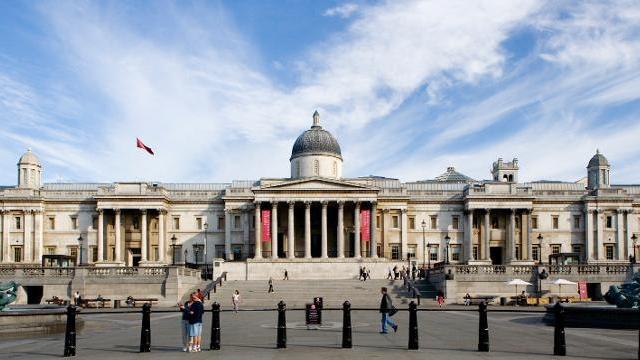

National Gallery, the ‘big house’ on Trafalgar Square

Some of my gentle readers will already be aware that this fall I am carrying my own arts career forward by advanced study at the Warburg Institute. Charitably offering me a place following a 20-year hiatus, a return is something I greatly look forward to. Coincidentally, the Warburg and its redoubtable director Dr William Sherman offered an online course this last week on Renaissance code and cipher, which course I was pleased to join. All this sounds forbidding and abstruse, but I must say, Professor Sherman made it anything but and I’m sure every attendee enjoyed it, which enjoyment made easy an understanding of the subject matter.

With all that, I was put in mind of another man of redoubtable character, Sir Ernst Gombrich, whose book The Story of Art made him, arguably, the most famous director in the Warburg’s history. Redoubtable, but as I was reminded when I watched on YouTube a 1995 interview he gave to Charlie Rose, modest but frank, and I was, as one tends to be when someone great repeats an opinion held by oneself, cheered when Gombrich said his favorite museums were small ones. Large collections, if I remember rightly, Sir Ernst said gave him indigestion.

As indeed they sometimes do me, too. Mind you, the National Gallery is impressive beyond description for the totality of its holdings, but the effect is too often that totality minimizes very many of the works on show and lionizes others. I cannot think very many people, were they to consider the matter, would think Reynold’s blustery portrait of Banastre Tarleton on a par with Jan van Eyck’s exquisite Arnolfini Marriage. But I suppose that’s the point I’m making- that they are under the same roof renders them, prima facie, of equivalent merit.

Years ago, I taught several sections of art history and a student asked a question I’ve often heard over the years, to the effect of what it was that made any artistic opus one of museum quality. My answer was then as it is now- because it’s in a museum. Glib and circular, but of course, someone, or a collection of someones, and not God, made the decision to acquire an artwork for an institution based on some manner of criteria that may, or may not, have made sense at the time the decision was taken. Whoever thinks these criteria are something sacred, rigidly permanent, and immutable needs to see the vast numbers of works currently being deaccessioned to know that is not the case. The current rather euphemistic phrase museums are fond of employing is rationalizing their collections.

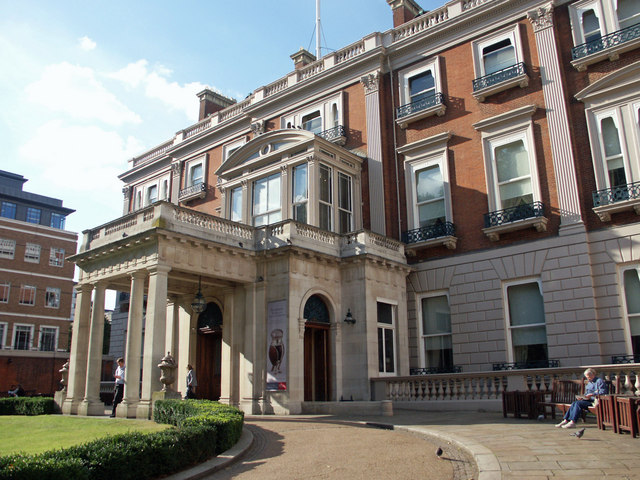
The Wallace Collection, a smaller, more digestible ‘big house’

I am reminded of a construct Gombrich developed many years ago in Art and Illusion, what he termed cultural schemata. What people see and what they think they see may be quite different things. A big public gallery designed in a classical idiom- and this applies to a similarly large and similarly styled stately home- and a gothic cathedral are all powerful signifiers of immense importance which must perforce apply to any cultural artifacts- including paintings and sculpture- contained within. As I had once heard it said of Antony Blunt, his exhortation to his students was ‘Just look at the pictures.’ Hard to do when one is overawed by the setting, and in Gombrich’s case, given indigestion.

What I less elegantly call the big house effect is still very much an activating force in the world of art. Although the number of museum attendees has rather dwindled in the last decade- COVID aside- people still expect to see works by familiar names they consider, if only because their work is in an edifice as grand as a museum, as masters. But living artists of all stripes and levels of ability seek validation through a mention on their own CV’s that their work is held by various permanent collections. In my own brief sojourn into the museum world, I think of the almost daily receipt of some manner of work an artist sought to give to the contemporary art museum at which I was then employed. Admittedly, my appointment was a temporary one that lasted only a few months, but even so, I cannot now remember a single work that was accepted into the museum’s permanent collection or- and perhaps this is more telling- the names of any of the artists who proffered their work.

A museum’s rationalizing its collections is also given to mean a significant move toward inclusivity, selling off older works and acquiring those newer that at last acknowledge artistic production within cultures and ethnicities that until recently have been little considered. Laudable, and an acknowledgment, as well, of galleries’ changing constituencies. But works on show don’t immediately become canonical, and it must be remembered that museum attendees, again a nod toward Gombrich, wish to see what they think they ought to see. Will the big house effect continue to contribute an importance to new works, and fast track them into the canon? I hope it will, but it remains to be seen.


A few of my devoted readers know of my link to Fresno County, and a few of you know that, with death absenting our last familial connections, we are absenting our own selves from a place I too often must characterize as benighted. Sited barely a three-hour drive from San Francisco to the north and Los Angeles in the south, Fresno has largely made itself immune to the culture and liberality of these two cultural poles in the same way a stone in a pond makes itself resistant to the penetration of water.

Just now, the local zoo has hosted a family friendly nighttime event in honor of Pride Month. And part of the family friendly entertainment included drag performances. Quelle horreur! Or so claimed (but not in French) very many of the mouthier local grandees and church leaders, who for the millionth time trotted out that old saw about how any exposure to the LGBT community would ‘infect’ younger minds. What balderdash.

Don’t be afraid to look!

For the years Keith McCullar and I lived in England, it was a pleasure to take our godchildren to the Christmas pantomime at any one of a number of venues. For those of you not in the know, I’ll explain. The pantomime is a family friendly performance of singalong, and some manner of fantasy stage play, always for laughs and always slapstick, but based on some familiar story. Aladin and his magic lamp and Jack and the Beanstalk are perhaps the stories most often performed. Another feature- Aladin and Jack, young boys in the story, are always played by girls, and the female characters are always performed by men. If one were to say that this is some kind of aberrant seasonal behaviour that requires parents to spend the rest of the year debriefing their impressionable children, you’d be dead-ass wrong. The antecedents of the panto go back centuries and include venerable traditions that include the Commedia dell Arte, and ‘Twelfth Night’ from the pen of the hallowed William Shakespeare. In what I hope is gratuitous historical note- all the female roles in Shakespeare’s day were performed by men in drag. Something further- panto performances throughout the United Kingdom are invariably sold out.

Back, though to our own burgh of Fresno and those bleating their own notions of moral and right behaviour. I’ve nearly given up arguing the point, as the local opposition to gender fluidity appears concomitant with anti-intellectualism. A dialog about cultural and literary traditions falls on obtusely deaf ears.

And a final note, of particular moment to any parent anywhere who seeks to ‘protect’ their youngster. You won’t, of course, and this from my own self who grew up on a farm in rural Fresno County. I knew I was gay long before I knew anyone else was or anything about it, for that matter. What I did know was shame and embarrassment the germ of which I carry with me still and that I’ve spent my whole adult life trying to expunge. What I can also tell you is that whatever’s done in the guise of protection and avoidance of inclusivity thwarts an LGBT child’s positive sense of self and well-being. And that begs the question, is that what you really want to do? For anyone who answered yes, all I can say is I pity your kids who you’ve destined through close minded ignorance to years of a pitiably anguished existence.


Tomorrow marks the opening of Queer Britain, the museum space in newly redeveloped old warehouses behind King’s Cross Station. With a disparate group of trustees and supporters with backgrounds as varied as are the faces of the LGBTQ+ community, this must then presage the variety of exhibits and purposes the museum seeks to serve.

Both in purpose and chronology, the museum’s founding marks a follow-on from the 2017 Tate Britain exhibition ‘Queer British Art 1861-1967’ curated by Clare Barlow. The exhibition itself marked 50 years since the partial decriminalization of same-sex activity in Britain, which process moved forward with glacial slowness despite recommendations contained in the Wolfenden Report, commissioned by Parliament, and published in 1957.

Queer British Art 1861-1967

However, it is 65 years on since the Wolfenden Report, and now, at long last, being queer in Britain, temporized by Tate Britain in 2017, can become quite literally institutionalized. With all that, one needs to realize that, whatever its public objective, it privately becomes a safe space for any and all who identify as queer.

It’s this knowledge that safe spaces are still essential that we should all find troubling, and mea culpa, I have to remind myself of this sad fact of modern life. Out and with a relationship of nearly 42 years’ duration, I lose sight of the fact that I have been lucky enough to create my own safe space and with the ability, if required, to retreat into it. On the days at work when someone sought to denigrate whatever it was I had to say, broadly hinting that as a gay man, my thoughts must of course be addled as those of my straight colleagues would not be, home was and still is a bastion of safety and comfortability.

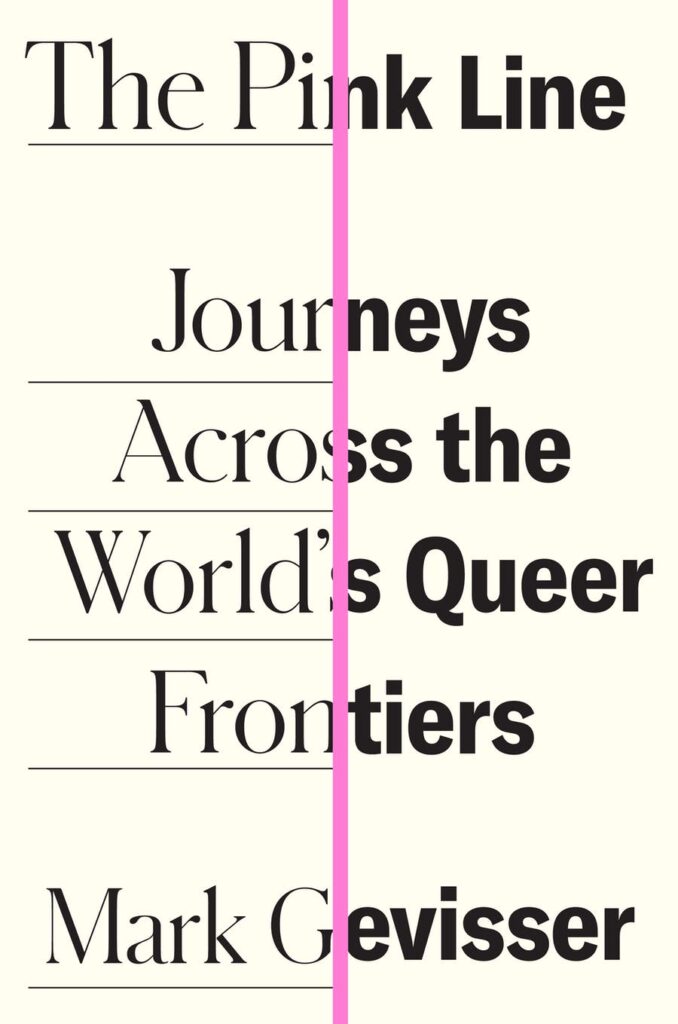
So, indeed, fortunate, but the fact of the establishment of Queer Britain makes it abundantly clear that not everyone is as fortunate, and that it remains essential that, despite public sanctions, safe spaces exist. As I recall ‘Queer British Art’, I am reminded of the exuberance of Duncan Grant whose Bloomsbury Group freedom allowed his production of art that made no secret of his sexuality. I must, however, contrast Grant with his contemporary Glyn Philpot whose own homoerotic artworks were at odds with his private torment. And this says nothing at all about those in our own time who’ve escaped governments and cultures where being queer is tantamount to asking for- and receiving- a death sentence. Mark Gevisser’s recent The Pink Line: The World’s Queer Frontiers makes it abundantly clear that the danger of being queer is, in the larger world, more the rule than the exception.

And so we have Queer Britain, another step in a very long journey that some of us have found easier to tread than have others. My own challenge, and Queer Britain is a timely reminder, is to be wary of an enveloping comfortability, and remain mindful of one’s queerness and in so doing, make it possible for others who’ve not been so lucky to have the ability to be their own queer selves.


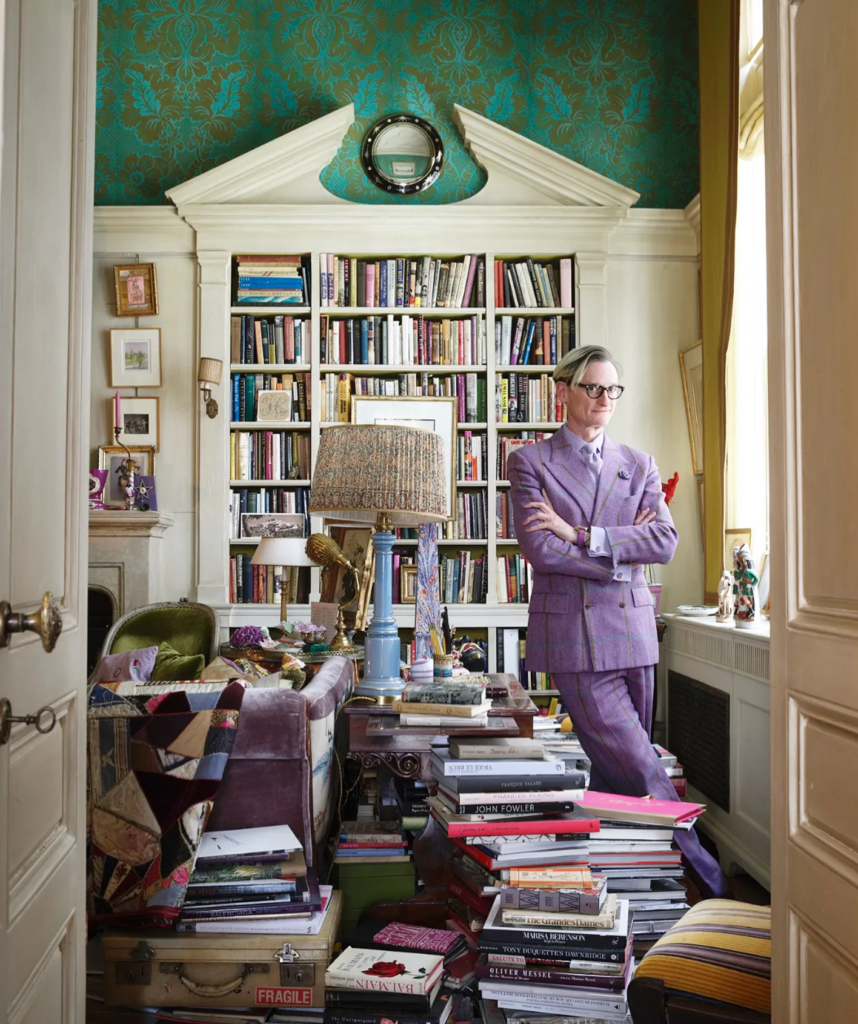
Hamish Bowles, in vogue, courtesy of Vogue

And I thought camp was dead. If you, gentle reader, mournfully thought so too then you’ll be cheered to read the debut letter penned by World of Interior’s new editor in chief, the self-described ginger fop himself, Hamish Bowles. Of course, that Rupert Thomas, founder editor Min Hogg’s long serving successor, was on his way out and Bowles was on his way in is old news, and it was in New York Magazine last fall I read an opinion piece that owner Condé Nast sought to remake the small circulation book into something more like its shall we say gauche American cousin Architectural Digest.

I have to admit, as I saw the size of not just its book but its editorial content shrink, I left off my subscription to AD where, at one time, we had advertised regularly. Perhaps it had something to do with how our advert featuring a 17th century lacquer cabinet on its giltwood stand tended not stand out against a three page lifestyle spread by Fendi. Call me old fashioned, or more likely, go ahead and say it, out of touch with the modern world, but the notion of mass market luxury goods seems a contradiction in terms.

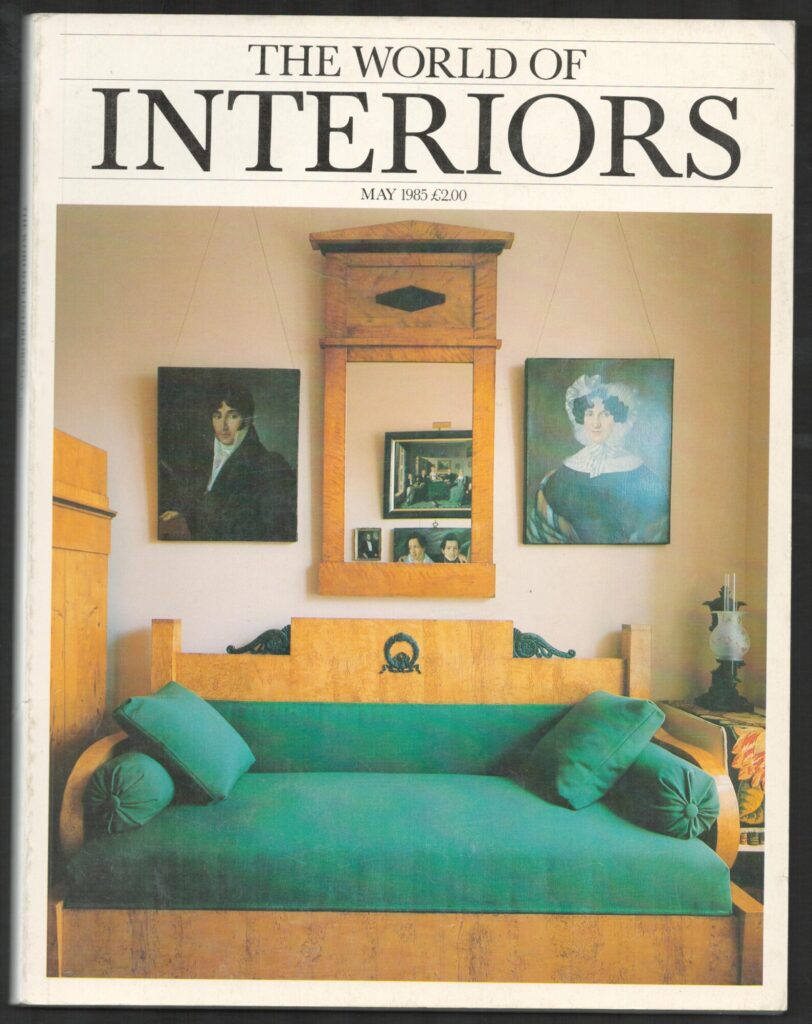
World of Interiors, 1985

And so it was that I comfortably retreated to the sanctuary of World of Interiors. Its blend, I should say proper blend, of editorial including just the right mix of the cutting edge and the historic and traditional, was in the reading rather in the manner of coming home and sitting in a favorite chair, a respite following a long and unpleasant journey. But I suppose, in this day and age, where everything moves so fast, and if it doesn’t the generally received wisdom is that there is something pathologically amiss, that was considered by Condé Nast the magazine’s premier shortcoming. At a worldwide circulation of about 55,000 it could hardly compare to innumerable social media influencers whose followers often number in the millions. Given my age, temperament, experience, and dare I say it, aesthetic sense, my gentle readers might think it superfluous of me to ask ‘So what?’

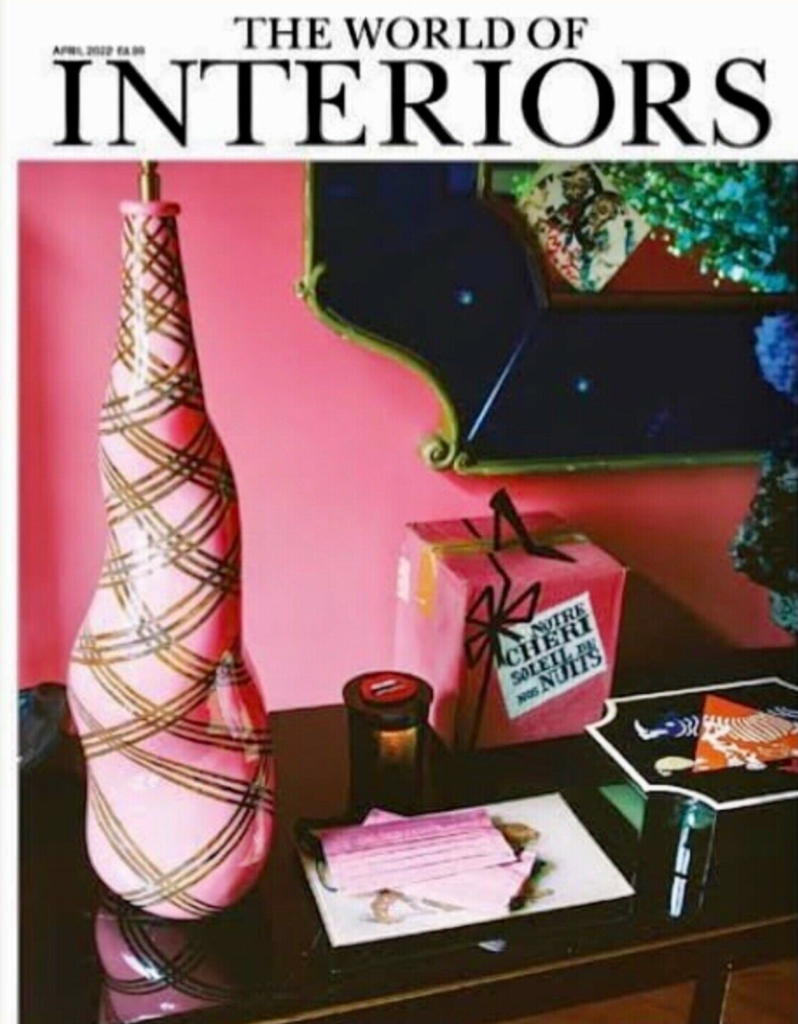
World of Interiors, 2022- comfortably unchanged

But then, print media is in for the fight of its life, displaced by social media but as the old saw goes, if you can’t beat them, join them, and this is apparently what Condé Nast has charged World of Interiors to do. Min Hogg amongst her talents was also an intriguing, albeit rebarbative, personality. Rupert Thomas, less so, but loyal to Min’s vision, which as it was comfortably stable over his 22 year tenure must surely have been his vision, too. Hamish Bowles? Well, God bless him, eccentrically attention grabbing, and the larger than life size personality that seems to articulate well with social media. Does this then bode well for the success of WoI? Time will tell, but what I do know, the current issue that marks Bowles’ debut is a much larger book that while it looks like the old one in format, is significantly bulked up with adverts.

Oh, well, things change, nothing stays the same, I write while thinking wistfully I have over the last four decades enjoyed World of Interiors immensely. And, no, I have no plans to discontinue my subscription. I am sure, he writes sardonically, Condé Nast is relieved to hear it.

As Hamish Bowles concludes in his debut Editor’s Letter ‘Welcome to our new world!’