
Masterpiece 2011For those of us in the trade, the London season formerly meant the overlapping June extravaganzas that were the Olympia and Grosvenor House fairs. Alas, Grosvenor is no more, and Olympia is much diminished. The Haughtons’ Art Antiques London, also just concluded, and Masterpiece London,  to begin the end of next week, are both redoubtable fairs, and it is hoped that their longevity will testify to their success. But for now, all this has to be in the future.

David Moss had reported that a particularly well-known media personality had this month shopped both Olympia and Art Antiques London, along with her interior designer. It was noted that this particular person was a buyer known for her shopping sprees. Not noted, however, was whether or not she had indulged in one on these recent visits. Frankly, this person is also known to Chappell & McCullar and I must say, she knows the value of a dollar. Presumably earlier shopping sprees had left her, by the time we began to trade with her, much wiser than she had been. Moreover, stories of vast sales to a cadre of moneyed buyers are, for Keith McCullar and me, the stuff of legend. In the 9 years we’ve been in business, it’s never happened to us, and, frankly, it’s never happened at any fair we’ve ever participated in.

One swallow does not a summer make, nor one uber-celebrity an antiques fair successful. What seems lost now in the mists of time is that the London fairs were originally timed to coincide with a larger social season that culminated in early July, where after the beau monde carried on to estates in Scotland, or seaside holidays in Brittany, Biarritz, or the villas of the Cote D’Azur. The fairs capitalized on the masses of moneyed folk watering in London, and certainly with Grosvenor’s royal patronage, it traditionally attracted the right people. Like any other fairs, these developed their own momentum, even while the seasonal progresses of ‘society’ became somewhat amorphous. Still, Grosvenor and Olympia- Grosvenor because of its quality, and Olympia because of its huge number of dealers- represented an unparalleled buying opportunity.

Clearly something changed. The hordes that trooped through Olympia and Grosvenor began to dissipate even before the economic debacle of the last several years. Of course, the waning numbers of dealers who are the backbone of any show are unable to make the (substantial) financial commitment to participate- but probably would do so if their experience had, heretofore, been profitable.

What to do, what to do- possibly a blood offering to the god of economic cycles- we would happily volunteer one or two people. But even if propitiated, will that necessarily bring back those thousands who once traversed the fairs of the London season, or will they continue to find their time, and money, better spent elsewhere?


What’s now cliché is the notion that anything that so becomes does so because of the large element of universal truth it contains. Such with the nugget of wisdom given voice in this epoch by Mark Twain, to the effect that the older Twain got, the smarter his father seemed. My experience certainly accords with Mark Twain, and so I looked forward to spending Father’s day with my own dad.

As most of my loyal cadre of readers know, my parents, indeed most of my family, are in Fresno, and that is where Sunday took me. As with my own esteem of my father, Fresno continues to grow in estimation. Following our Father’s day brunch, we drove back through the heart of Fresno. It has to be my favorite route, down Van Ness Boulevard from Old Fig Garden to Fresno High, then a jog to the left on Weldon Avenue to Wishon, crossing Olive Avenue to Fulton Street, and all the way to Downtown.

On the one hand, it grieves me to find that so much of the commercial development of the central corridor has languished over the course of the last 50 years. The art moderne monument that is the Tower Theater sadly now no longer contains the Daily Planet, the astonishingly kicky bar and restaurant that the late Hannah Benson made a neighborhood mainstay for nearly 30 years. What a tragedy! With interiors by designer Gary Steinert, it articulated perfectly with the space it occupied. Its back wall in the bar area was dominated by Steinert painted nude women of sinuous mien in the manner of a Lalique vase. A nod to the era when Keith and I were Planet habitués, we invariably referred to them as the nudes on ‘ludes. Not that I had any more experience with Quaaludes than repeating that phrase…it’s something somebody told me about. Honestly, though, with Hannah’s well-stocked bar, we had plenty of opportunities to, shall we say, misbehave. Some two decades ago, on an evening a day or two in advance of a planned trip to London, Keith and I, along with our traveling companion who shall remain anonymous, were revving up prior to departure. Our friend took a shine to a comely new server and, doubtless given impetus from the many healing waters on offer, asked the young man if he would like to go to London with us. Surprised more than shocked, he declined. The redoubtable Hannah got wind of this, and told the young man that he was making the mistake of his life. Well, possibly, but risking a digression, I don’t recall anyone feeling bereft, and the trip itself was cheerful to the point that one’s health was at risk.

On the other hand, it’s pleasing to note that so much of Fresno’s heart survives. A bit further south, beyond where Wishon gives way to Fulton Street, Tokyo Garden, what’s by now a camp classic, is still as popular as it ever was, with a menu that is unchanged since I first went there 40 years ago. Actually, that’s not quite true. Although always with sashimi on offer, a nod was made in the direction of modern cuisine some years back with the introduction of sushi. But I’m somewhat plodding in my own taste, and it’s nice to know that venerable dishes like sukiyaki are still available, and still cooked the same way. A kimono clad waitress will plug in a burner that looks like one of my parents’ wedding presents, and stir fry the fresh ingredients, always including a fair number of straw mushrooms, to toothsome perfection. Although the restaurant has done a jazz night every Thursday for years, the food has nevertheless kept it in front of a younger clientele. If one wants to corroborate this, take a quick look at the reviews on Yelp. That Yelp may be new to you confirms, alas, that you are not yourself ‘younger’. A pleasant surprise surrounding all this is the aggressive building of loft style live/work spaces that presumably respond to modern day yuppies- that seems a tautology, but I was once a yuppie and am now, shall we say, mature- who would rather walk to work and walk to entertainment, and walk to the nearby Fresno Free Market. Not quite so well known as Les Halles, the Fresno Free Market serves the same function, and is nearly as old. My father and I share similar memories of enjoyable Saturday mornings, him in the early 1930’s and me in the early 1960’s, browsing with our mothers the fruit and veg stalls in what was, and still is, an egalitarian and multicultural mecca.

One can divine from all this that Father’s day in Fresno was a pleasant one for me, and I have to say, my father in fatherly fashion is enlarged by his children’s pleasure. This blog entry moved away from what my readers, and me, too, thought it might be, a simple reminiscence about my father, but it, in fact is. Our own fond memories of living in the same town, albeit separated by a generation, indicate not so much shared external experience but a shared internal matrix that can only exist between parents and their children. Fun in and a fondness for Fresno is but one of many reasons I am grateful to my father.


Keith McCullar and I very much enjoy what we do. No question about it, even on a day that is, shall we say, less than remunerative, we are surrounded by beautiful objects and plopped down in the middle of that extraordinary venue that is San Francisco’s Jackson Square.
But you know all that. What you don’t know, and, for the most part, can’t know, are the extraordinary people we’ve had the opportunity to meet through the operation of our galleries. Every hour of every day brings the expectation of yet another wonderful gallery visitor paying us the extreme compliment of, just possibly, wanting to trade with us. One such was the Reverend Peter Gomes, the Harvard divine who sadly passed away a couple of months ago. Although mightily out of the closet for 20 years, he bristled when he heard himself described as a gay minister. His gayness was but one of many elements that defined him, and his outing of himself was in the same spirit of liberation that, a generation earlier, impelled the unassuming person of Rosa Parks to decline to ride in the back of the bus. Nevertheless, June is Gay Pride Month and PBS has just aired a new documentary ‘Out in America’ containing, sadly, Gomes’ last interview. Consequently, Reverend Gomes is much on my mind, so herewith a few recollections.

Not a particularly large person, but once Peter had something to say, which he did fairly early on in his visit, his voice was, in a word, commanding. To say that it was affected is inaccurate- ‘inflected’ might be nearer the mark, as everything was said with precision, and with a cadence and decibel level that, even in conversation, one might assume that his remarks were, out of habit, more usually addressed to a larger audience. As his particular choice amongst our stock at the time was a pair of Regency era portraits of an Anglican clergyman and his wife, of course he told us fairly extensively of his background and interests. I wish I could recount some particular bon mot, but can’t-  what I can say is that the way he said whatever it was was mellifluously impressive.  What does occur to me is that Peter’s voice and manner of expression accorded with his deportment and manner of dress. A tweed jacket with a pocket square, a French blue shirt and gray trousers- but these were all probably signature features, with my memory possibly in this regard enhanced by seeing many, many subsequent images of Peter on TV similarly dressed.

Keith recalls him as kindly and pastoral, and it must be remembered that Peter served a congregation to the end of his life. But our overarching sense even in our brief association was of a man with what Wayne Dyer terms ‘big dharma’- a larger than life person with concomitantly larger than usual responsibilities to fulfill. That Peter was aware of this, too, is abundantly clear in his final words in ‘Out in America’. ‘I am doing’, he said, ‘what God has called me to do, and I think I’m doing it reasonably well.’

We thought so, too.


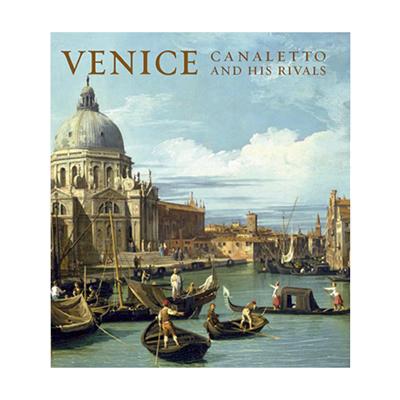
Venice, Canaletto and his rivalsWith the phenomenon of the Grand Tour something of perennial interest to both Keith McCullar and me, we were eager to visit the exhibition ‘Canaletto and his rivals’ at the National Gallery. For all the English milordi fortunate enough, and their were many, to further the worldly education thought necessary for those who were the inheritors of the mantle of not only civility but civilization, following the de rigueur stay in Rome required to absorb what one could of the classical world, the ultimate goal, then, was Venice. The Las Vegas of its day, Venetian view painters daubed busily to render the views of Venice that were then sent to England as pleasant reminders of what were in most cases memorable visits. Reminders that could, of course, be displayed in polite company.

The exhibition was noteworthy as it was curated not by a museum professional but by the dealer in view paintings, Charles Beddington. The exhibition itself was not large, and featured, as the name implies, works not only by Canaletto, but also by his contemporaries and students- Marieschi, Bellotto, and Guardi. As well, the exhibition featured works that predated Canaletto’s preeminence- Vanvitelli and Carlevarijs most prominently- giving us some artistic and commercial context from which Canaletto emerged as a major figure.

Although a number of the paintings were pictures we were already familiar with, it was none the less pleasant to see them all grouped together. Sadly, though, the exhibition and the catalog provided no new scholarship, and, in fact, mostly consisted of a rather trite formal comparison of the work of one artist to another, using Canaletto as something of a benchmark. What would certainly have added interest to the exhibition would have been, at the very least a discussion of the pigments that made view paintings look the way they do. Venice’s long history as a port made it a bonanza for artists and their colormen, with imports of rare, expensive and unusual pigments typically available in a broader array than perhaps anywhere else in Europe. Further, it is hard for me to imagine that an exhibition limited solely to 18th century view paintings could be complete without a discussion of Prussian blue. The first synthesized pigment, it solved a centuries old problem for artists- an inexpensive blue that was also non-fugitive. The expansive skies of Canaletto’s, and all his contemporaries, probably are in no small part influenced by the ability to conveniently use Prussian blue to achieve them.

Interestingly, Brian Sewell, the long time art critic of the London Evening Standard was likewise disappointed at the level of scholarship. But Sewell was more than anything alarmed that the National Gallery in London, where the exhibition originated, should have allowed a dealer whose stock in trade are Venetian view paintings, to mount such an exhibition. Heretofore, I would generally argue that a dealer is a great person to curate an exhibition anywhere, as dealers not unusually have a greater knowledge base than many academics and museum professionals. The reason for this, in general terms, is that dealers, whose own academic backgrounds often match those whose sole profession is scholarship, have the advantage of seeing many, many more objects. A museum professional’s particular familiarity with his own institution’s collection often leads to a type of tunnel vision. The dealer, on the other hand, will perforce have the opportunity to see and examine a much broader range of material at auctions and in private collections access to which academics or museum professionals might not be privy. What alarms Brian Sewell is that the Canaletto exhibition seems to have an overarching commercial imperative, with the associated catalog with its dearth of scholarship more on the order of what one might expect in a selling exhibition.

Unfortunately, in this Sewell and I agree.


Mt VernonNot surprising to find that Keith McCullar and I are cultural tourists, and, given our vocations, it might be more precise to say we’re material culture tourists. Though not  spiritualists, we every now and again find a nearly palpable presence visiting certain historic sites that preserve and contextualize the habitation and personal property of the original occupants. One of those places is Mount Vernon.

Despite the hordes of visitors, Mount Vernon nevertheless carefully preserves a mansion and farm that I would venture to say the nation’s first first couple would, were they to return, not only recognize as little changed but also find instantly habitable. Although George and Martha Washington had no children together, Mrs. Washington’s descendents and General Washington’s nephews constituted an enormous extended family that, upon the death of Martha Washington in 1802 resulted in the dispersal of a significant amount of the original contents of the mansion. That said, all the articles removed from Mount Vernon were instantly accorded the status of relics by subsequent owners such that their preservation was insured. Consequently, in the fullness of time, articles have found their way back to Mount Vernon in such significant numbers that one can gain a real sense, at least visually, of what life was like during Washington’s final years there.

An understanding of all this is helped immeasurably by the catalog The George Washington Collection: Fine and Decorative Arts at Mount Vernon, written by estate director of collections Carol Borchert Cadou. Along with the descriptive text, the original acquisition of virtually all the items by the Washingtons is given some considerable measure of context by the citation of family correspondence related to each item. Often it is a letter from Washington himself, either to his London agent or some such other trusted friend or relation, requesting that a purchase be made in his name. What’s particularly interesting is the frequency and specificity with which Washington, while seeking pieces of the best quality in the latest fashion, gives the admonition that, in purchased articles, any thing of a showy mien be avoided. One could say that these sorts of inclusions in the catalog might serve a hagiographic purpose, but I rather think the ostensible serves to reinforce the actual, that Washington was thoroughly the prudent, practical figure that he is always thought to be. Though knowledgeable in the ways of the world, through the catalog his possessions speak of someone who is not precisely worldly and, moreover, consciously seeks to avoid any such association. His ongoing attachment to Mount Vernon and its furnishings reflects very little in the way of self-aggrandizement, but more in consonance with a manifestation of the virtue of rural life Washington felt accorded with his own position as a member of the gentry. As a military and ultimately a political leader he knew himself to be a public figure whose every action, and every acquisition, must be in keeping with this same virtue he knew his countrymen should, and hopefully would, emulate.