It doesn’t happen too often, but from time to time we are asked from where we get the items we offer, and what we paid for them. Slightly intrusive, but reasonable, I suppose, in that what we sell is not inexpensive, and those who have the money to purchase are not in the main, shall we say, supine.

We prefer to source our material privately as there is cachet attached to items that are fresh to the market, something, say, that has been out of sight for perhaps centuries. This happens to us from time to time, with exciting results. Witness a late 17th century lacquer cabinet on stand, lost from view in the last century, but acquired by us and determined to have a singular provenance- and sold by us to someone in the entertainment field of equal singularity.
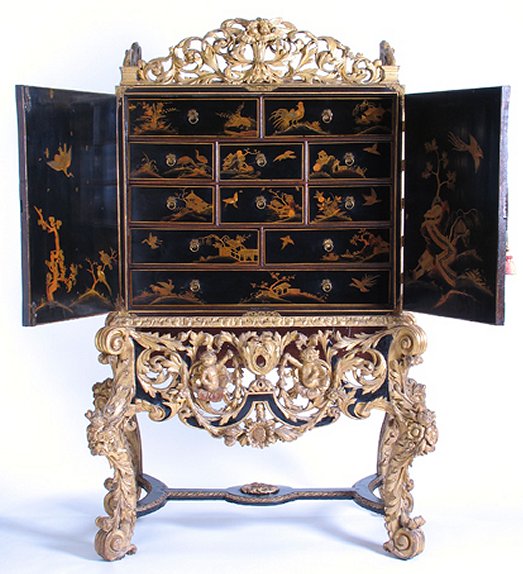
William & Mary period, ex Stoke Edith Manor, ex John Fowler, ex Laurence Olivier and Vivien Leigh

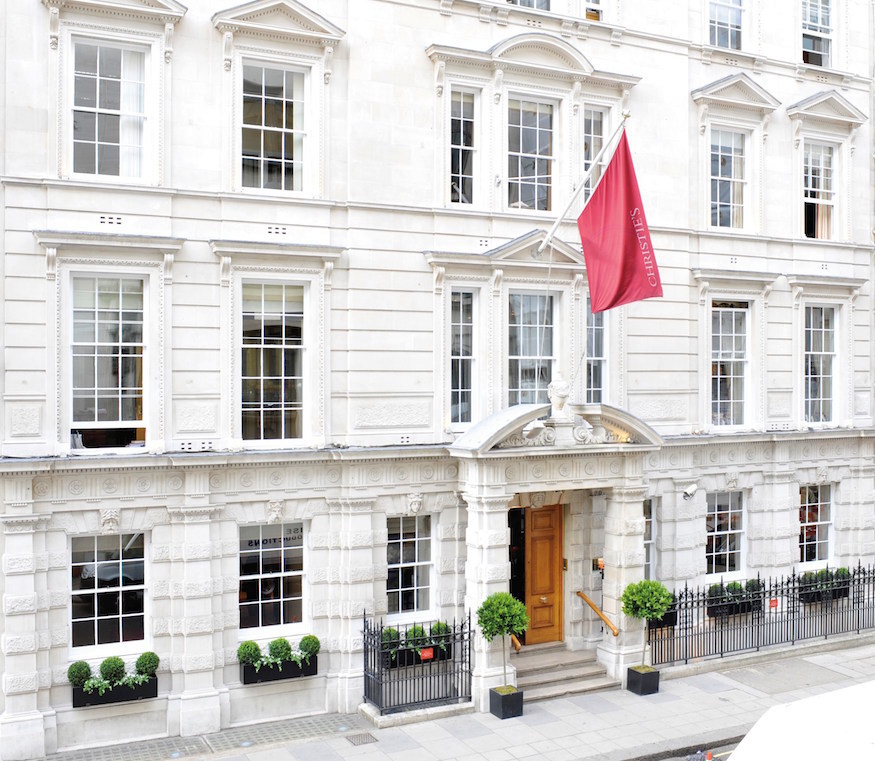
We do, though, make the occasional purchase at auction. The major auction houses, despite their onerous commission charges, nevertheless seek to be a retail vendor of period and contemporary fine and decorative art and have done their level best to erode the established retail trade in art and antiques. I read not so long ago an interview with a gentleman I know from The Georgian Group, and an employee of Christie’s. Married to an aristocrat and spending most of his time in the family pile, in his interview he decried the depleting numbers of countryside dealers. His tears doubtless of the crocodile variety, as his efforts are working a treat to dispatch the trade from this mortal coil.

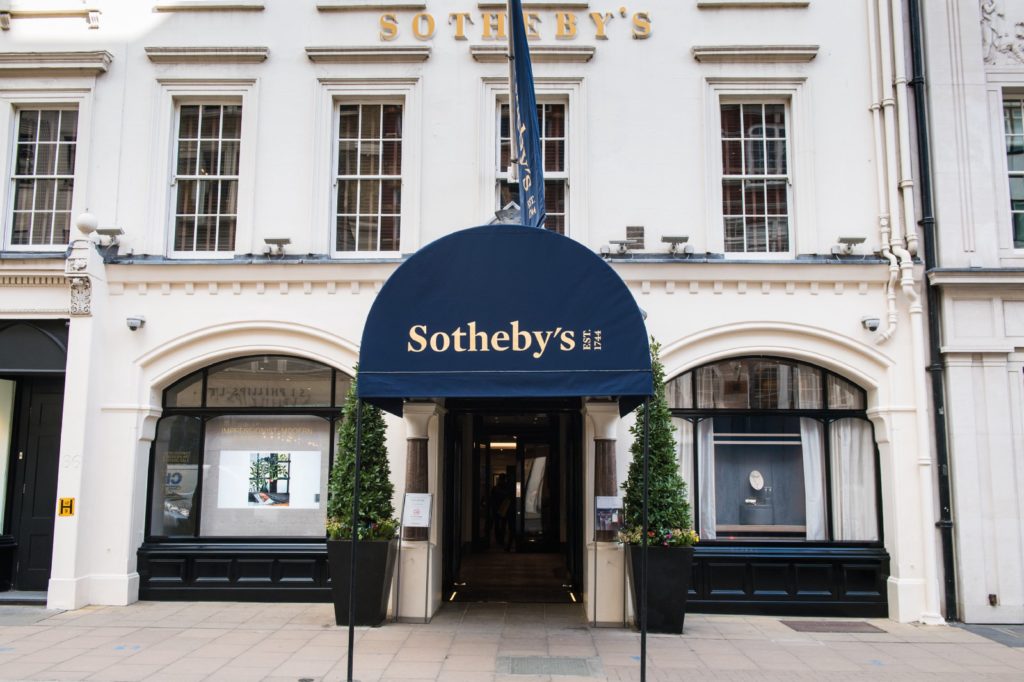
Nevertheless, auctions remain a source for very many dealers, and just at the moment, vaunted Bond Street dealer Richard Green is in the soup, sued by a buyer of two old master paintings claiming that the dealer should have disclosed the pictures were only recently purchased at auction. This is true- a Brueghel purchased in November, 2017, and a Ruysdael purchased at Sotheby’s in June, 2017, were then sold by Richard Green to complainant Gary Klesch at TEFAF Maastricht in March, 2018.

In this imbroglio I am firmly on the side of dealer Richard Green. How our stock is sourced, beyond the simple statement that it was sourced through legitimate channels, is nobody’s business. As I have written before, whatever we’ve acquired at auction was always at a price that justified the time we spent examining the piece beforehand to judge its quality and condition, attending the sale on the day, laying down our money for purchase, transporting it away, paying for its (inevitable) restoration to put it in saleable condition, and then and only then, offering it for sale. For us, since we started in business, we have divined two tiers within the trade- a wholesale price and a retail price, and be assured, there is for us and most of the dealers in the accredited trade, significant value added by the time a piece is offered for retail sale.

All that said, to stay in business our stock in trade must be priced to sell. In the case of Richard Green, The Antiques Trade Gazette quotes a gallery spokesman as saying ‘…there are very good comparables (to the paintings sold to Gary Klesch)…’ As well there must be. The fine art databases, as well as those of the major auction houses, are replete with detail, including the recent sale records of the two paintings purchased by Richard Green and resold to Mr Klesch. What’s more surprising, and makes Mr Klesch’s claim markedly less credible, is the vocation of his wife with whom he examined and purchased the paintings. Dr Anita Klesch is a research fellow in the department of the history of art at Birkbeck College, one of the constituent colleges of the University of London. As her CV on Birkbeck’s website indicates, her speciality is the effect of information technology on the history of art, and the uses of digital imagery in education. Hmmm…presumably the ‘digital imagery’ and ‘education’ referenced in her CV was not self-directed and therefore did not extend to her own purchases.

We do ourselves have recalcitrant, although not litigious, clients. Though rarely and not recently we have been chided by an erstwhile client or two about matters associated with their purchase that while niggling and specious basically boiled down to a case of buyer’s remorse. We have this particular phenomenon in common with Richard Green, and doubtless that gallery’s invoices make the same disclaimers as to price as well as condition. Also, the prospective buyer is assumed- and given our price points it is a very, very reasonable assumption- that the buyer is sufficiently sophisticated to ask whatever questions they might- from us or any other expert they wish to consult.




Ki’i now in the Bishop Museum

During my brief professorial career, I would typically conduct my class meetings in the better public galleries, and as this all took place in London, one can imagine the splendid offerings in front of which I would expatiate. Actually, that didn’t happen much, expatiate, I mean, as I was always more interested in what the students were interested in, and found the time spent a bit more productive if there was interaction. Of course, Socrates figured all this out quite a little while ago, and doubtless did this lots better than I ever could. Nevertheless, query and response were always my method. For those students who expected whatever I had to say to wash over the top of them, as it were, and then to have information absorbed like liniment- well, it never happened that way.

In any event, the question I always began with, oftentimes in the National Gallery, was what is it that constitutes a piece of museum quality? Trick question, but the answers I typically got were the obvious ones, and usually, perhaps always, with ‘masterpiece’ as a defining term. My gentle readers will doubtless recoil at the use of this overworked, and inaccurately used, term. ‘Masterpiece’ for those in the trade is more specifically defined, as it would in any guild from the 12th century onward, as the workshop production of someone of some seasoning and acknowledged skill who then executes something of sufficient quality within his sphere to then qualify as a master. Apprentice, then journeyman, then master. Simple, and simply defined for 10 centuries.

But that doesn’t answer what I had hinted was a trick question, viz what constitutes museum quality- and the answer, simply that it is in a museum. The fact is, in the best institutional collections supported by the best curatorial scholarship, pieces end up there that while they may be good, they also may not be. One can watch the auction market these days to find that pieces once vaunted and given pride of place in some of the world’s best collections are sold off- ‘sold to support future acquisitions’, which is code for saying the piece is not quite as good as once thought. Often, though, what was acquired had at least as much to do with who gave the object as the object itself. If something is presented to a museum by a particular grandee, the acquisitions committee would be at great pains to turn it down.

It is sadly the case that one of my favorite museums, The Bishop Museum in Honolulu, is now possessed of a shall we say questionable ki’i representing a war god, given it in 2018 by tech titan Marc Benioff. Purchased at Christie’s in Paris by Benioff for about $7,500,000 for the specific purpose of giving it to the Bishop Museum, it has been characterized by ethnographic dealer Daniel Blau as ‘the sort of thing you see in a tiki bar.’ That the ki’i has gone on display at the Bishop Museum as the centerpiece of a major exhibition has so far generated a fair bit of heat, as the piece has no known provenance prior to the 1940’s. Frankly, when it was offered last year, it appeared to me the piece was in much, much too good a condition and with the carving much too crisp to be of the age it was claimed. To my knowledge, there was no scientific testing done to determine age- either prior to auction or subsequently- with reliance given to recent provenance, that of the private collection of tribal art dealers father and son Pierre and Claude Verite.


Masterpiece of mistake?

With a discussion about the piece published in a recent edition of The New York Times penned by their redoubtable arts journalist Scott Reyburn, Mr Reyburn hints that donor Marc Benioff might be in trouble with the IRS for having donated an expensive work that may be shown to be worth substantially less. If Mr Benioff were duped, it appears to me that his motivation for making the purchase for immediate repatriation to Hawaii shows nothing more than that his heart is in the right place. For the time being, the ki’i remains on display and given pride of place, but one wonders how much the Bishop Museum has overlooked before it was accepted as part of its permanent collection. That Mr Benioff would by any nonprofit organization be considered a heavy hitter might in this day and age of difficult sledding for public institutions of art and culture might result in an occlusion of normal curatorial skepticism.

Ohia lehua

For myself, I can say that very many of my own acquisitions of Hawaiiana were made in Europe- fascinated as Europeans were with the exotic ethnographica collected in the late 18th and through the middle of the 19th centuries, I do find from time to time isolated good pieces that have come on to the art market, though with a provenance lost in the mists of time. But as with so much else, demand spurs imitation, and doubtless the interest in Hawaiian material resulted in the production of items that when they were produced may have been kitsch, but in the fulness of time, might now be seen as the genuine article. The now disputed ki’i was described when it was offered by Christie’s as a ‘mate’ to an example contained in the collection of the British Museum. Hmmm….a ‘mate’ you say? Were there multiples of this type of material produced in prediscovery Hawaii? No, there were not. Of a style, yes- multiples, no.  Perhaps something someone thought it worthwhile later to copy- not unlikely.

I notice from the article in The New York Times, the subject ki’i is carved from ‘Hawaiian medisteros’, or what any kama’aina would know more commonly as ‘ohia lehua. As it happens, I did acquire two ‘long’ ki’i from an ethnographic collection in England. Tall and heavy, with some age, the ki’i in my own collection were probably shall we say repurposed from old railway sleepers, something in abundant supply from the late 19th century when so much of Hawaii island was cleared for the planting of sugar cane. Was I duped into thinking my acquisitions were prediscovery? No, but perhaps if I had the length of purse of someone much better heeled my resultant cost might have been much different.


For those few of my gentle readers who are not amongst the cognoscenti, I have to tell you that Oscar night, along with Halloween and San Francisco Pride weekend, constitute the total of gay high holidays for the year. Keith McCullar and I, as keepers of tradition, did then yesterday quickly absent ourselves from another engagement, hieing away home to watch the Academy Awards. What a waste of time, but much much more on that in a bit.


Fresh from the bay Dungeness crab- the best part of our Oscar experience

I rather misspoke in the first paragraph, as our watching the Oscar ceremony is just not keeping the faith with other gay men, but rather with one in particular. It was our habit many years ago to annually watch the Oscars with a group of friends, one of whom was particularly dear. Larry would always make this an event, including cold cracked Dungeness crab, with a variety of seasoned mayonnaises. That all this occurred in San Francisco and environs you’ve probably already divined. It did, of course, and sadly most of those with whom we enjoyed this annually are now gone, including dear Larry, dead in 1992 of HIV. Keith and I don’t always speak of it, but we know in our heart of hearts our insistence on watching the Oscars and having cold cracked Dungeness crab is in memory of former days. We have, though, consigned Larry’s insistence on serving strawberry margaritas along with the crab to the dustbin of history.

Last night was a crappy show, doubtless made worse by the Academy’s decision to go forward without a host. Sans host, it was apparently also the decision to generally scrap anything fun and lighthearted. Where is Billy Crystal when you need him? Mind you, I am not taking issue with the Academy’s decision to offload the comic who was scheduled to host. His not so subtle attacks on those in the LGBT community contained within his comedy act were not just offensive but antithetical to the inclusivity the Academy is at long last accomplishing. That he said he had dropped all of this from his act is a matter of too little much, much too late. Too late indeed, as the offensive material was a component part of his act- not 30 years ago, not 20 years ago- but less than 10 years ago. His public mea culpa on Ellen Degeneres’ TV show was characterized by Ellen as redemptive, but here she and I part company.

But all this specific controversy aside, the plain fact is the Oscars ceremony has been running downhill for years, simply because it is a bore. Too slow, too much auxiliary fluff, and not enough action. I enjoy big screen entertainment, and I want to be entertained watching the small screen, too. What now passes for entertainment- although the why of this mystifies me- is the red-carpet arrival of the celebrities. What was for decades an incidental part of any Hollywood gathering has now moved centerstage, with female stars victimized by the fashion industry, forced to pose for photos- backs arched and chests pushed out- then pulled aside and forced to make unintelligible response to vapid questions posed by the hosts of TV morning shows.

This year it was the year of the train, with so many of these poor women wearing a gown odd in itself, to which a superfluous train had been appended. How so many of the women were able to navigate the red carpet, to say nothing of ascending steps to the stage if they were so lucky I’ll never know. This, of course, compounded by the obscenely high heeled shoes they all wore. Note for next year’s ceremony- have some game female presenter catch her heel in her train and fall on her tush- it will be the hit of the show. Poor Bette Midler was underutilized in last night’s outing- put this up to her, and I’ll bet she’d be game.

What to do, what to do? Shall we plan to watch next year’s ceremony? It is frankly now an open question in our household, despite our nostalgic, albeit wistful, connection with the Oscars. I would opine it is likewise an open question for the presenting network, with so very few advertisers underwriting the broadcast we counted a number of small, local businesses hawking their wares. While our counting the number of local adverts in the run of the Oscars might seem an odd occupation, it broke the monotony of the show, and is, I suppose, emblematic of the tedium the Academy Awards ceremony has now become.


The big news in the trade this morning is the increase Christie’s has posted for buyer’s premium. It always surprises the numbers of people who assume, when the hammer falls in the saleroom, that that is the ultimate price of the item sold. Far from it, with Christie’s now charging the purchaser a minimum of 25% over the hammer price on lots up to £225,000, 20% for up to £3,000,000, and a full one percent increase to 13.5% for anything above £3 million- just for the privilege of doing business with them. Put another way and cribbing figures cited in the relevant article in this morning’s edition of Antiques Trade Gazette, if one were to purchase a painting at Christie’s flagship King Street saleroom, if the hammer fell at £500,000, the invoice presented including the auction premium charged the buyer would now total- wait for it- £611,250. For the higher end lots, the increase is staggering. For a £10,000,000 purchase, expect the invoice to now total £11,560,000. Mind you, that doesn’t include the 17-1/2% Value Added Tax (VAT) charged by Christie’s on the premium portion, or the applicable sales tax on lots sold in the United States. For my local California readers, expect to pay a minimum of yet another 8% if you make a purchase at Christie’s in New York.

Staggering, and bear in mind, what the buyer pays, the consignor of the sold lot pays a nearly equivalent amount in seller’s premium, plus everything from soup to nuts in what the trade refers to as junk fees- the cost of illustrating the lot, cost of extraordinary handling, and the cost of insuring the lot while it is in Christie’s possession.

While Christie’s is the first to announce this increase, Sotheby’s will doubtless shortly follow suit. In fact, based on Sotheby’s financial performance, it is surprising they were not the first to announce. Christie’s as privately owned one must assume that this increase is to shore up its bottom line. Sotheby’s as publicly traded is an open book. Of interest, Sotheby’s closing share price today of $40.50 is 26% lower than it was a year ago, and 35% lower than its 52-week high in June, 2018, of $60.

And both Christie’s and Sotheby’s need the money. As many times as the international press reports an impressive sale, there is some offsetting report of auction house mismanagement or malfeasance. The story just now making the rounds is of the consignment to Christie’s of a painting by Francis Bacon for sale by private treaty, with Christie’s then selling it publicly- and without the consignor’s permission- for many millions of dollars less than they had guaranteed the consignor. As I am writing about increased auction house premiums, it is apropos to remind my gentle readers that a price fixing scandal involving Christie’s and Sotheby’s colluding on the establishment of premiums that put Sotheby’s star auctioneer Dede Brooks and its chairman Alfred Taubman in jail.

But with all that, I have to acknowledge that the auction house business is an expensive one, with a huge expense in personnel, so huge in fact that Christie’s and Sotheby’s regularly winnows out the upper and middle range staff, replacing them with those fresh of face with art history diplomas with the ink still wet. Oh, yes- and that command a much lower salary. And of course, trimming the bottom line is the name of the game, with both Christie’s and Sotheby’s, although they’ve sought to be a retail vendor of fine art and antiques and seek ever yet to be a force online, facing blistering competition that has increased at a nearly exponential rate from innumerable online selling platforms.

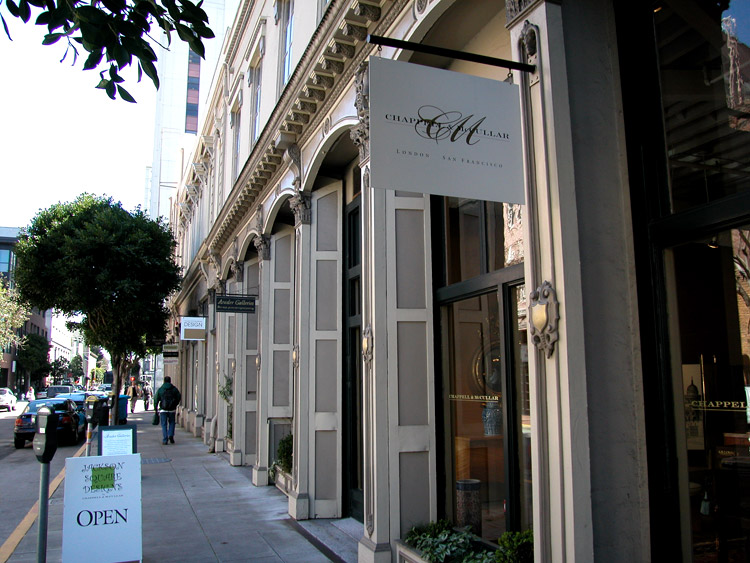
Chappell & McCullar- where the smart folks shop!

While it appears that I am crying crocodile tears about the vicissitudes of Christie’s and Sotheby’s, I will admit that over the years I’ve done business with them, and profitably. By weight of numbers, one will find the occasional bargain- a sleeper, as David Dickinson on BBC’s ‘Bargain Hunt’ would have it. Banking on the rapidity with which items consigned must be cataloged- and the inexperience of those doing the cataloging- there are, not often but occasionally, pieces on offer to be had for not precisely a song, but for a price at which I can add value and then resell at a profit. Bear in mind, the risk for me is that what an item sold for is available online for anyone who cares to to look and see. As recently as a week ago I spoke to a buyer in Canada who questioned me about an item I had purchased at auction in London. I gleefully told him that it was me who spent time to view, assess and bid on the item, it was me who spent time and money making arrangements to ship the item, it was me who spent time and money directing and paying for the restoration to put the item in saleable condition, and it was me who researched, accurately described and photographed the item and presented it, at long last, for sale.

So, with Christie’s and Sotheby’s, while making an auction purchase has always been expensive and risky, expensive has crossed the threshold into prohibitive territory- and is no less risky. Lots of the aphorisms that apply not in a positive way are applicable when dealing with them- phrases like ‘the price is not the cost’, ‘as-is, where-is’, and the perennially apt- ‘caveat emptor.’


Just now, Loew’s Regency on Park Avenue is famed as the pied a terre of in-it-up-to-his-neck Trump minion Michael Cohen. For Keith McCullar and me, this present scandal is an aside from one of our favorite features of Loew’s Regency, its basement serving as it once did as the venue for Michael Feinstein’s cabaret. An extraordinary talent himself, he booked in some great performers during times he himself was not onstage. I don’t think I am going out on any kind, for the benefit of the cognoscenti, an ‘outing’ limb, but a fair old number of the performers were if not divas then at least ladies part of a grand Broadway tradition, and one of these was Carol Channing.

As luck sometimes has it, we happened to be in New York and staying at Loew’s Regency, as I had been invited to speak at an interior design conference at the nearby D & D Building. We were unaware that Carol Channing was performing literally under our noses until we checked in, and I have to admit, it was Keith who insisted we change our evening plans to take in her show. What we would have missed had Keith not prevailed! A sidebar- Keith has had me under his thumb for the last 38 years, so for those of you interested in these kinds of things, he has long since prevailed.

To start with, Feinstein’s in that location was intimacy itself- a real cabaret, dark, and painted a deep red, and seating at most 60 people- virtually all ringside. We booked on the day but nevertheless had a great table the two of us, good food and plenty to drink. For me, sluggard that I am, this is usually enough to guarantee a satisfactory night out. Well, hold on- then there was Carol herself.

What a performer. I am bankrupted for superlatives. She came on stage and her friendliness was a perfect match for the intimacy of the room. We felt as though we’d gone to an afterhours mixer. She sang, she danced, she told jokes, she told stories. Her show was themed ‘The First 80 Years are the Hardest’, and despite the fact that Miss Channing was then 84, the show was a tour de force. A funny aspect, though, as an octogenarian she could recount stories of fabled performers that predated her and one of these was Tallulah Bankhead. As Miss Channing told it, in her early days on Broadway she was so keyed up after performing she’d have trouble sleeping at night. Once Miss Bankhead came back stage, and Miss Channing confided this to her. ‘Dahling, do as I do, and just pop a tablet or two of phenobarbital’. ‘But Miss Bankhead, aren’t they terribly addictive?’ ‘Nonsense, dahling- I’ve been using them every day for nearly 30 years.’

Seated behind us at a table alone was a small, dark man of a certain age who, from time to time, would shout something or other to the stage, and we initially thought he was a heckler. In the fulness of time, though, Miss Channing had the spotlight turned on this gentleman who she introduced as her husband, and childhood sweetheart, Harry Kullijian. What we took to be heckling was actually just throwing Miss Channing the occasional line- and the doing of this, as far as we were concerned, was the only indication that perhaps she was not as young as she once was. We chatted with Harry at the end of the show and he asked me how I liked my entrée, which happened to be braised lamb shank. When I said I did he told me that the inclusion of this Armenian specialty on the menu was, recognizing his own heritage, his real contribution to the show.

In short order, Miss Channing was there, and the four of us chatted for barely a minute and the two of them were off. ‘Selfies’ I’ve always considered very, very common, and they were not then ubiquitous, but were I possessed of an iPhone and the presence of mind I would have overlooked my scruples and taken a snap of the four of us.

Miss Channing is now gone, and even Michael Feinstein’s cabaret has moved, now to be found in the basement of the old Studio 54. Many of the divas are now gone- the performer who followed Miss Channing was none other than Kitty Carlisle. But if Keith and I live as long as Carol Channing, neither of us will forget a moment of the fabulous evening we spent watching the fabulous Carol Channing.